Best Dental Implant Brands: A Comprehensive Comparison
Dental implant brands refer to the manufacturers of the titanium or zirconia fixtures used in implant dentistry. Over 40 FDA-cleared implant systems are available in the US market as of 2026. The global dental implant market was valued at approximately $5.1–5.5 billion in 2025 (Fortune Business Insights, Grand View Research, Precedence Research) and is projected to reach $5.5–6.0 billion by 2026. The five dominant manufacturers — Straumann Group (~22.5% global market share, ~35% US share), Envista Holdings (Nobel Biocare), Dentsply Sirona (Astra Tech), Osstem Implant (#1 globally by unit volume sold, #3 by market share), and ZimVie (formerly Zimmer Biomet's dental division) — collectively hold approximately 80% of the worldwide market (GM Insights 2024).
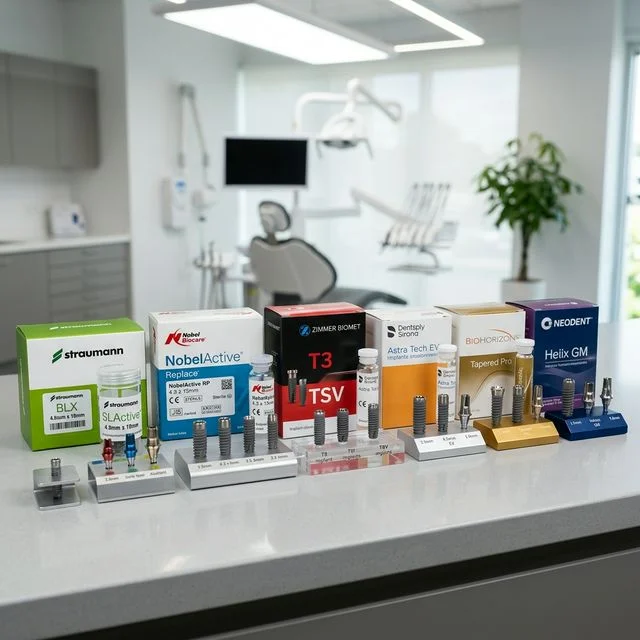
The implant system your surgeon selects has a measurable impact on osseointegration speed, prosthetic versatility, long-term complication rates, and — critically — what happens if you need a repair or replacement years from now. Over 200 implant manufacturers exist globally, but a handful of evidence-backed systems dominate the US market.
This guide evaluates the leading dental implant brands across three pricing tiers, comparing surface technology, FDA clearance status, clinical evidence, prosthetic compatibility, and warranty programs to help you have an informed conversation with your surgical team.
How We Evaluate Implant Brands
Our brand assessments are based on five clinical criteria used by implantologists worldwide:
- Peer-reviewed clinical evidence: Number of published studies, documented success rates, and length of longitudinal follow-up data.
- Surface technology: The micro-topography of the implant surface directly affects the speed and quality of osseointegration. Technologies include SLA (sandblasted, large-grit, acid-etched), anodized surfaces, and proprietary coatings.
- Prosthetic component library: A broader range of abutments, healing caps, and prosthetic parts means the restorative dentist has more options to achieve optimal esthetics and function — and that future maintenance is straightforward.
- Global availability: If you relocate, travel, or need emergency care in another state or country, the implant system must be widely available so any qualified dentist can service it.
- Warranty and support: Manufacturer-backed warranty programs covering implant failure, component replacement, and re-treatment support.
Compare any two brands side-by-side with our Brand Comparator Tool.
Premium Tier: The Gold Standard
Market Leaders with 60% Global Share
These three companies collectively hold approximately 60% of the global implant market and possess the deepest clinical evidence base:
- Straumann (Switzerland): Founded in 1954, Straumann is arguably the most extensively researched implant system in the world, with over 900 peer-reviewed publications. Their proprietary SLActive® surface technology demonstrates faster osseointegration (as early as 3–4 weeks vs the standard 6–12 weeks). The BLX implant is designed for immediate loading in both posterior and anterior sites. Average cost per implant: $2,000–$2,800. Success rate: 98.8% at 10 years.
- Nobel Biocare (Sweden/USA): Pioneers of the original Brånemark osseointegration concept and the All-on-4® treatment protocol. Nobel's TiUltra™ surface provides a gradual roughness gradient from the implant body to the collar, optimizing both bone integration and soft-tissue attachment. Average cost: $1,800–$2,500. Success rate: 98.2% at 10 years.
- Dentsply Sirona / Astra Tech (Sweden/USA): The Astra Tech OsseoSpeed™ surface features a fluoride-modified topography clinically shown to stimulate bone response. Dentsply Sirona's portfolio includes the ASTRA TECH Implant System EV with its distinctive BioManagement Complex™. Available in over 120 countries. Average cost: $1,800–$2,400.
Learn why premium brands command higher prices and when the investment is justified in our premium brands analysis. For a regional perspective, see our guides to Swiss implant brands.
Mid-Range Tier: Clinical Performance at Lower Cost
Best Value-to-Quality Ratio
These manufacturers offer FDA-cleared systems with strong clinical evidence at 20–40% lower cost than the premium tier:
- Zimmer Biomet (USA): A major orthopedic and dental implant company with over 30 years in the market. Their Tapered Screw-Vent® implant is one of the most widely placed systems in North America. The MTX® surface (micro-textured) supports reliable osseointegration. Average cost: $1,500–$2,100.
- BioHorizons (USA): Known for their Laser-Lok® collar technology, which creates a micro-channel surface that promotes connective tissue attachment at the gingival margin — reducing crestal bone loss. Strong in the Southeast US market. Average cost: $1,400–$1,900.
- Osstem (South Korea): The world's fourth-largest implant company globally and the #1 system in Asia. FDA-cleared with extensive clinical data across 70+ countries. Their SA (sandblasted, acid-etched) surface delivers reliable performance. Increasingly adopted by cost-conscious US practices. Average cost: $800–$1,400.
Compare all mid-tier options in our mid-range brands guide. For more on Korean implant systems, read our Korean dental implants review.
Value Tier: Budget-Friendly with Proven Track Records
FDA-Cleared Options Under $1,500
For patients where cost is the primary constraint, these FDA-cleared systems offer the best value-to-quality ratio:
- Hiossen (USA/South Korea): A subsidiary of Osstem, designed specifically for the North American market. The ET III SA implant features the same surface technology as Osstem at competitive pricing. Growing rapidly among younger implantologists. Average cost: $700–$1,200.
- MIS Implants (Israel): Part of the Dentsply Sirona family since 2020, MIS offers V3 and C1 implant systems with a well-designed prosthetic platform. Known for excellent customer support and training programs. Average cost: $800–$1,300.
- Dentium (South Korea): A fast-growing Korean manufacturer with the SuperLine and Implantium systems. FDA-cleared, widely used in Asia and increasingly in the US. Average cost: $600–$1,100.
Explore our affordable dental implants guide for more cost-saving strategies, and see our best budget dental implants ranking. For a look at American-made alternatives, read our American dental implant brands guide, or learn about emerging Chinese manufacturers in our Chinese dental implant brands review.
Titanium vs Zirconia Implants
The material choice for the implant fixture itself is a growing decision point:
| Factor | Titanium (Ti) | Zirconia (ZrO₂) |
|---|---|---|
| Track record | 60+ years of clinical data | ~15 years of clinical data |
| Osseointegration | Extensively proven | Comparable in recent studies |
| Esthetics | Grey metal (may show through thin gums) | White/tooth-colored (ideal for thin gum biotypes) |
| Biocompatibility | Excellent (rare titanium sensitivity) | Metal-free (preferred by holistic patients) |
| Design flexibility | Two-piece (implant + abutment) | Often one-piece (less prosthetic flexibility) |
| Cost premium | Standard pricing | +$500–$1,000 per implant |
For most patients, titanium remains the evidence-based gold standard. Zirconia implants are most appropriate for anterior teeth in patients with thin, translucent gingival tissue or documented titanium sensitivity. For a deeper comparison, read our titanium vs zirconia implants guide, or explore the best options in each category: top titanium brands and zirconia implant guide.
Surface Technology & Osseointegration Science
How Surface Engineering Affects Healing
The implant surface is the single most important engineering factor affecting clinical outcomes, as documented in peer-reviewed research on PubMed. Modern surface treatments include:
- SLA / SA (Sandblasted + Acid-Etched): The most widely validated surface technology. Creates a dual-roughness micro-topography (1–3 μm macro-roughness + 0.5–1 μm micro-pits) that dramatically increases bone-to-implant contact compared to machined (smooth) surfaces.
- SLActive® (Straumann): A chemically-modified SLA surface stored in isotonic saline, maintaining hydrophilicity. Clinical studies demonstrate accelerated osseointegration — potentially reducing healing time from 6–8 weeks to 3–4 weeks.
- TiUltra™ (Nobel Biocare): A multi-zone surface with gradually increasing roughness from the smooth coronal collar to the roughened apical body, optimizing both soft-tissue seal and bone integration.
- Laser-Lok® (BioHorizons): 8-μm and 12-μm laser-machined micro-channels that create a biologic seal by promoting true connective tissue and bone attachment at the implant collar.
Dive deeper into the science behind these technologies in our comprehensive surface technology comparison.
Warranty Programs Compared
| Brand | Implant Warranty | Coverage Details |
|---|---|---|
| Straumann | Lifetime | Full replacement of failed implant + components |
| Nobel Biocare | Lifetime (NobelProcera) | Fixture + prosthetic components |
| Zimmer Biomet | Lifetime | Fixture replacement |
| Osstem | 10 years | Fixture replacement |
| MIS Implants | Lifetime | Fixture + abutment (since Dentsply acquisition) |
| Hiossen | 10 years | Fixture replacement |
How to Choose the Right Brand for Your Case
Matching Brand to Clinical Scenario
The "best" implant brand depends on your specific clinical scenario:
- Standard single-tooth case, good bone: Any tier will perform well. Consider mid-range brands like Osstem or Zimmer Biomet for excellent value.
- Immediate loading / same-day teeth: Premium systems like Straumann BLX or Nobel Biocare NobelActive are specifically engineered for high-torque placement and immediate provisionalization.
- Aesthetic zone (front teeth): Premium brands offer the widest selection of custom abutments and zirconia options for optimal gum contouring.
- Full-arch restoration: The All-on-4® protocol was developed by and is best documented with Nobel Biocare. Estimate your full-arch cost with our Full Mouth Cost Calculator.
- Budget-focused: Hiossen, Dentium, and MIS deliver FDA-cleared quality at 30–50% less than Swiss/Swedish brands.
The most important factor is not the brand — it's the surgeon. An experienced, board-certified implantologist achieves excellent results with any reputable system. Understand the full procedure process, review the complete cost breakdown, or explore ways to save.
Emerging Brands Worth Watching in 2026
Beyond the established tiers above, several manufacturers are gaining traction in the US market with innovative designs and competitive pricing. While their clinical evidence base is smaller than the established brands, they hold FDA clearance and demonstrate promising early results:
- Neodent (Brazil / Straumann Group): A Straumann subsidiary offering the Grand Morse® implant system with a Morse taper connection and focused on value-oriented markets. Priced 20–30% below the Straumann flagship line while leveraging the same R&D infrastructure. Growing rapidly in Latin America and now expanding into the US. Average cost: $1,000–$1,600.
- Megagen (South Korea): Known for the AnyRidge® implant with its unique knife-thread design that achieves high primary stability even in soft bone (D3–D4). The Xpeed® surface (calcium-coated nanostructure) claims accelerated bone response. FDA-cleared with growing US adoption. Average cost: $700–$1,300.
- Bicon (USA): A Boston-based company with a distinctive short-implant design (5.0–8.0 mm) that's particularly useful in cases with limited bone height, potentially avoiding sinus lifts or extensive grafting. Their plateaued root-form design and 360° abutment positioning offer unique prosthetic versatility. Average cost: $1,200–$1,800.
- Keystone Dental (USA): Offers the Genesis® and Prima Connex® systems with a platform-switching design engineered to minimize crestal bone loss. Strong domestic manufacturing and customer support. Average cost: $1,000–$1,500.
Compare any of these emerging systems against established brands with our Brand Comparator Tool.
Red Flags: How to Spot an Unproven Implant System
5 Warning Signs to Watch For
Not all implant systems are created equal. While over 200 manufacturers exist globally, many lack the clinical evidence, regulatory rigor, or global support infrastructure that patients depend on. Watch for these warning signs:
- No FDA 510(k) clearance: In the US, dental implants must have FDA 510(k) clearance (not just a CE mark from Europe). Ask your surgeon for the FDA clearance number — it's publicly searchable in the FDA 510(k) database. Any legitimate brand will provide this immediately.
- Fewer than 10 peer-reviewed publications: Established brands have hundreds (Straumann: 900+, Nobel Biocare: 700+). New brands should have at least 10–20 independent (non-manufacturer-funded) studies documenting 5-year outcomes.
- Proprietary-only components: If the system's abutments, screws, and prosthetic parts are only available from the manufacturer (no third-party compatibility), future maintenance becomes difficult and expensive — especially if the company closes or exits the US market.
- Unusually low pricing (≤50% of market rate): An implant fixture priced at $200–$300 may use lower-grade titanium alloy (Grade 23 Ti-6Al-4V vs the preferred commercially pure Grade 4) or lack validated surface treatment technology.
- No warranty program: Every reputable manufacturer offers at least a 10-year warranty on the fixture. No warranty suggests a lack of confidence in the product or insufficient financial stability to back claims.
Bottom line: Always ask your surgeon to identify the exact implant brand and model being used, verify its FDA clearance, and confirm that prosthetic components are widely available in the US. This protects your investment for decades to come.
Brand Availability by US Region
Not every implant system is equally available across the US. Distribution networks, surgeon training programs, and regional preferences create geographic patterns worth knowing — especially if you plan to relocate or want a second opinion from another provider:
| Region | Dominant Brands | Growing Brands |
|---|---|---|
| Northeast (NY, MA, CT) | Straumann, Nobel Biocare, Zimmer Biomet | Bicon, Keystone |
| Southeast (FL, GA, NC) | BioHorizons, Nobel Biocare, Straumann | Osstem, MIS |
| West Coast (CA, WA, OR) | Straumann, Nobel Biocare, Osstem | Hiossen, Megagen |
| Midwest (OH, IL, MI) | Zimmer Biomet, Straumann, Nobel Biocare | Dentsply Sirona, Dentium |
| South/Southwest (TX, AZ, CO) | Nobel Biocare, Osstem, BioHorizons | Hiossen, Neodent |
Regional availability matters because it affects: (1) whether your general dentist or a new specialist has the prosthetic components on hand for future maintenance, (2) time needed to order replacement parts, and (3) the pool of surgeons trained on your specific system. Premium global brands (Straumann, Nobel Biocare) are available virtually everywhere; value-tier brands may have limited distribution in some regions.
Find local implant pricing and brand availability with our state-by-state guides, or estimate your total investment with our Cost Calculator. Understand the full procedure step-by-step, compare implants to dentures, discover affordability strategies, and model your monthly payments with our Financing Calculator. Track your post-surgery recovery day by day.
2026 Brand Comparison Matrix: At a Glance
The following table compares the top dental implant brands across key clinical and commercial factors:
| Brand | Tier | Origin | Surface Tech | Material | 10-Year Success | Patient Cost | Best For |
|---|---|---|---|---|---|---|---|
| Straumann | Premium | Switzerland | SLActive (hydrophilic) | Roxolid (Ti-Zr alloy) | >96% | $4,500–$7,000 | Accelerated healing, narrow ridges |
| Nobel Biocare | Premium | Sweden/USA | TiUnite (anodized oxide) | Grade 4 Titanium | >95% | $4,000–$6,500 | All-on-4, immediate load, aesthetics |
| ZimVie (formerly Zimmer Biomet Dental) | Premium | USA | MTX + Trabecular Metal | Ti + Tantalum (trabecular) | >95% | $4,000–$6,000 | Compromised bone, immediate stability |
| BioHorizons (Henry Schein) | Mid-tier | USA | Laser-Lok (laser-machined) | Grade 4 Titanium | >95% | $3,500–$5,500 | Soft tissue management, aesthetics |
| Dentsply Sirona (Astra Tech) | Premium | Sweden/USA | OsseoSpeed (fluoride-modified) | Grade 4 Titanium | >95% | $3,500–$5,500 | Digital workflows, guided surgery |
| Osstem | Value | South Korea | SA (sand-blasted + acid-etched) | Grade 4 Titanium | >98% (5-yr) | $2,500–$4,000 | Budget-conscious, high volume |
| MegaGen | Value | South Korea | Xpeed (SLA + CaTiO₃ nanostructure) | Grade 4 Ti / Ti-6Al-4V ELI | >97% (5-yr) | $2,500–$4,000 | Immediate placement, soft bone |
| Dentium | Value | South Korea | SLA (sand-blasted + acid-etched) | Grade 4 Titanium | >96% (5-yr) | $2,000–$3,500 | Lowest cost, basic restorations |
Use our side-by-side brand comparator tool to compare any two brands in detail.
Premium Tier: Straumann, Nobel Biocare, ZimVie
Straumann Group — The Global Market Leader
Straumann Group reported CHF 2.6 billion in revenue for full-year 2025 with 8.9% organic growth, and projects high single-digit organic growth for 2026 (Straumann Annual Report). The company holds approximately 22.5% of the global dental implant market and roughly 35% of the US market (iData Research 2024), making it the undisputed market leader. Straumann controls almost half the global premium segment and ~15% of the value segment through its multi-brand portfolio.
- Roxolid alloy (85% Ti / 15% Zr): A proprietary titanium-zirconium blend confirmed at 85% titanium and 15% zirconium (straumann.com). This alloy delivers higher tensile strength than commercially pure titanium (Grade 4), enabling narrower implant diameters (as small as 3.3mm) that preserve more natural bone in tight interdental spaces — particularly critical in mandibular incisors and narrow alveolar ridges.
- SLActive surface: A hydrophilic (water-attracting) surface created by sandblasting, acid-etching, and chemical activation under nitrogen protection. This surface significantly accelerates osseointegration — reducing healing time from 6–8 weeks to 3–4 weeks in ideal conditions. SLActive is the most extensively documented fast-healing surface in implant dentistry, with over 15 years of peer-reviewed clinical data.
- BLX implant system: Designed specifically for immediate loading protocols. Features a unique Velocity drill protocol and progressive thread design optimized for both high and low bone density. Combines with SLActive surface for the fastest documented integration in immediate-load cases.
- iEXCEL system (launched 2025): Straumann's newest generation implant platform designed to improve clinical outcomes and practice efficiency. The iEXCEL rollout has already contributed to market share gains in mature European markets including Germany and Austria, targeting a 10% market share increase in its segment.
- Multi-brand strategy: Beyond the premium Straumann line, the group operates Neodent (mid-tier, strong in Latin America), Anthogyr (Europe-focused value tier), and Medentika (compatible prosthetics), allowing Straumann to compete across all price segments simultaneously.
- Clinical data: Over 20 years of peer-reviewed studies. 10-year survival rates consistently exceed 96%. The most extensively documented implant system in the world with the largest body of published clinical evidence of any implant manufacturer.
Best for: Patients who want the most clinically proven system with the fastest healing. Optimal for complex cases, narrow ridges, aesthetic zones, and immediate loading protocols. Full Straumann review →
Nobel Biocare (Envista Holdings) — The All-on-4 Pioneer
Nobel Biocare, a subsidiary of Envista Holdings Corporation (NYSE: NVST, spun off from Danaher in 2019), invented the All-on-4 treatment concept — the most widely adopted full-arch implant protocol in the world. Envista holds approximately 11.1% of the global implant market (ReportPrime 2024). In 2025, Nobel Biocare celebrated its 60th anniversary since the first titanium dental implant placement (1965), held at its Global Symposium in Las Vegas.
- TiUnite surface: A moderately rough, highly osteoconductive anodized titanium oxide layer. This microporous surface promotes rapid bone cell attraction (osteoblast adhesion) and has demonstrated strong long-term stability data across 30+ years of clinical documentation. TiUnite remains one of the most studied implant surfaces globally.
- All-on-4 protocol: Four strategically angled implants (posterior implants tilted up to 45°) support a complete arch of teeth, simultaneously reducing surgical complexity, bone grafting requirements, and cost. This proprietary protocol is the single most influential innovation in full-arch implantology. All-on-4 guide →
- Zygomatic implants: Nobel Biocare pioneered extra-long implants anchored in the zygomatic bone (cheekbone) for patients with severe maxillary bone loss — eliminating the need for bone grafts entirely. This remains a proprietary specialty with limited competition.
- Versah acquisition (February 2026): Nobel Biocare acquired Versah, the leader in osseodensification and bone densification technology. This technology uses specially designed burs to compact bone rather than remove it, improving primary stability in low-density bone — directly enhancing immediate loading success rates.
- Digital ecosystem: In December 2025, Nobel Biocare expanded its digital portfolio by launching the DEXIS Imprevo intraoral scanner. Combined with a strategic distribution partnership with 3Shape for TRIOS scanners (announced June 2025), Nobel now offers one of the most comprehensive digital impression workflows in the industry.
- Dual-brand strategy: Envista also operates Implant Direct, a value-tier brand using Nobel Biocare connection technology at lower prices, and Alpha-Bio Tec (Israel-based value brand), targeting mid-market and price-sensitive international markets.
- Clinical data: 10-year success rates exceed 95%. Extensive clinical documentation spanning 3+ decades and thousands of published studies.
Best for: Full-arch restorations (All-on-4/All-on-6), immediate function protocols, zygomatic anchorage, and clinics requiring comprehensive digital workflows. Full Nobel Biocare review →
ZimVie — The Bone Integration Specialist (formerly Zimmer Biomet Dental)
ZimVie spun off from Zimmer Biomet as an independent publicly traded company on March 1, 2022, inheriting Zimmer Biomet's dental and spine divisions. In December 2023, ZimVie sold its spine business to H.I.G. Capital ($375M) to become a pure-play dental company. In July 2025, ZimVie entered a definitive agreement to be acquired by ArchiMed for $730 million, with the transaction closing by end of 2025 — making ZimVie a privately held dental-focused company going forward.
- Trabecular Metal technology: Made from porous tantalum, this structure mimics human cancellous (spongy) bone at a structural level. Bone grows through the interconnected pores (not just around the surface), creating exceptional three-dimensional mechanical interlock absent in traditional implant designs. Originally developed for orthopedic joint replacement (20+ years of hip/knee data), now adapted for dental implantology. Particularly valuable for patients with osteoporosis or Type IV bone.
- T3 implant platform: Features the MTX (micro-textured) surface — a proprietary dual acid-etched texture — with optional HA (hydroxyapatite) coating for accelerated bone response during the critical first 2–4 weeks of healing.
- High primary stability design: Progressive thread geometry and tapered body optimized for immediate loading at insertion torque values of 35+ Ncm, even in compromised bone density scenarios where other systems may require staged protocols.
- Clinical data: Strong long-term evidence. The Trabecular Metal platform has over 20 years of successful orthopedic application data across millions of hip, knee, and shoulder implants — all supporting its unique bone integration properties. Dental-specific studies demonstrate excellent medium-to-long-term outcomes.
Important note (2026): Following the ArchiMed acquisition, ZimVie continues to operate as a dental company with expanded focus on Asia-Pacific markets and digital dentistry solutions (restorative and scanning). The Trabecular Metal technology remains fully available and supported. Patients with existing ZimVie implants should experience no changes in component availability or warranty support.
Best for: Patients with low bone density, osteoporosis concerns, or compromised healing conditions where maximum bone integration is critical. Full ZimVie review →
Value Tier: Korean Brands Reshaping the Global Market
South Korean manufacturers — led by Osstem, MegaGen, and Dentium — have fundamentally disrupted the global dental implant market over the past two decades. Osstem is now the #1 implant brand globally by unit volume sold and ranks #3 by market share (behind Straumann and Envista), while Korean brands collectively represent a significant and growing share of the global market. In South Korea alone, local manufacturers dominate 80% of the domestic implant market and hold the highest market share in China (geneonline.com).
Osstem Implant — Global Volume Leader
Founded in 1997 in Seoul, Osstem Implant achieved the position of world's #1 dental implant brand by sales volume as of 2024 (PR Newswire). The company's stated goal is to become the world's #1 dental company across all segments by 2036, with a revenue target of $6.74 billion. In the US market, Osstem operates through its Hiossen brand, which has rapidly grown its presence among US dentists and periodontists.
- SA surface (Sand-blasted, Acid-etched): Osstem's core surface treatment uses corundum (Al₂O₃) sandblasting followed by HCl/H₂SO₄ acid etching to create optimal micro-roughness for osseointegration. While less proprietary than SLActive or Xpeed, SA surfaces have the longest clinical track record of any implant surface type (25+ years globally).
- TS System: Osstem's flagship tapered implant system designed for versatility across bone types. Features a self-tapping design that simplifies surgical protocols and achieves high primary stability even in softer bone (Type III-IV).
- Clinical education model: Osstem differentiates through extremely aggressive clinical education programs, offering hundreds of courses annually worldwide. This educational infrastructure has created a large, loyal user base — particularly among younger practitioners and those in developing markets.
- Certifications: FDA 510(k) cleared, CE marked, ISO 13485 certified. Exported to 70+ countries.
Best for: Budget-conscious patients with adequate bone density and straightforward implant needs. Excellent choice when the treating dentist has extensive Osstem-specific experience. Full Osstem review →
MegaGen — The Surface Science Innovator
MegaGen has differentiated itself through its proprietary Xpeed surface technology and the aggressive AnyRidge implant system — designed for immediate placement and high primary stability even in compromised bone.
- Xpeed surface (CaTiO₃ nanostructure): MegaGen's patented surface treatment starts with standard SLA (Sand-blasted, Large grit, Acid-etched) and adds a hydrothermal calcium ion incorporation process that forms a calcium titanate (CaTiO₃) nanostructure on the implant surface. This is not mere coating — the calcium ions are chemically bonded into the titanium oxide layer. The Xpeed surface maintains a homogenous roughness value of Ra 1.8–2.5μm across the entire fixture, promoting uniform bone growth. Its distinctive blue color visually confirms the surface is 100% acid-residue-free. Clinical data spanning 10+ years demonstrates accelerated osseointegration with increased bone-to-implant contact (BIC) and higher removal torque values compared to standard SLA surfaces.
- AnyRidge system: Features an aggressive thread design with a unique knife-thread geometry that maximizes bone-to-implant contact area. The deep threads create exceptional primary stability, making AnyRidge a strong choice for immediate loading and extraction socket placement.
- Materials: MegaGen uses both Grade 4 commercially pure titanium and Ti-6Al-4V ELI (Extra Low Interstitials) depending on the implant system and diameter, providing flexibility for different clinical scenarios.
- Certifications: FDA 510(k) cleared, CE marked, ISO 13485 certified.
Best for: Immediate placement cases, soft bone scenarios, and clinicians who prioritize advanced surface chemistry at a value-tier price point. Full MegaGen review →
Dentium — Korea's SLA Pioneer
Established in June 2000 in Seoul, Dentium is recognized as the first South Korean company to successfully commercialize SLA surface treatment technology for dental implants. The company exports to over 70 countries and has built its reputation on reliable, straightforward implant systems at the lowest price point in the Korean tier.
- SuperLine implant system: Dentium's flagship system features a double-threaded, tapered body design for fast and easy insertion. A key advantage is interchangeable abutments across different implant diameters, simplifying prosthetic workflows and reducing the restorative component inventory that practices need to stock.
- SLA surface: Standard Sand-blasted Long grit, Acid-etched surface — the same fundamental technology used by Straumann (pre-SLActive) and many global competitors. While less advanced than MegaGen's Xpeed or Straumann's SLActive, SLA has the longest and most extensive clinical documentation of any implant surface type worldwide.
- R&D focus: Dentium operates a dedicated R&D center in South Korea and maintains an ongoing research program, though its investment level is smaller than Osstem or MegaGen.
- Certifications: FDA 510(k) cleared, CE marked, ISO 13485 certified.
Best for: Practices seeking the lowest-cost FDA-cleared implant option for basic single-tooth and straightforward multi-unit restorations. Full Dentium review →
Why Korean Brands Cost Less — The Economics
- Manufacturing scale: Korean companies produce implants at massive volume with highly automated production lines (especially Osstem, which manufactures millions of units annually). This dramatically reduces per-unit manufacturing costs.
- Lower R&D overhead: While Korean brands invest in innovation, their R&D budgets are substantially smaller than Straumann (which spent CHF 200M+ on R&D in 2025). This means fewer proprietary materials but significantly lower per-unit costs passed to clinicians.
- Deliberate market positioning: Korean companies intentionally target the value segment to capture global volume, particularly in Asia, Latin America, the Middle East, and Eastern Europe, before expanding into premium Western markets (a strategy that has proven highly successful for Osstem).
- Fixture cost to dentist: Korean implants cost practices $50–$150 per fixture vs $300–$500 for premium brands. A portion of these savings is passed to patients, but the practice margin often remains similar or even higher per case.
Are Korean Implant Brands Safe?
Yes — all implants sold in the US must be FDA 510(k) cleared. Korean brands undergo the same regulatory review process and meet the same safety and efficacy standards as Swiss, German, or American brands. However, there is an important clinical nuance:
- Premium brands (Straumann, Nobel Biocare) have 20–30+ years of peer-reviewed clinical data from Western research institutions documenting long-term outcomes across diverse patient populations.
- Korean brands typically have 10–15 years of Korean/Asian clinical data and 5–10 years of Western clinical data. Their success rates are excellent in short-to-medium-term studies (95–98%), but fewer long-term (15+ year) studies with Western patient populations exist.
- From a regulatory standpoint, all brands meet identical safety thresholds. The clinical evidence gap is narrowing each year as Korean brands increasingly publish in European and American peer-reviewed journals.
For most patients with normal health and adequate bone, this difference is clinically insignificant. But if you have compounding risk factors (low bone density, uncontrolled diabetes, immunosuppression, heavy smoking), the deeper clinical certainty of a premium brand with 20+ year outcome data may provide meaningful additional confidence.
Implant Material Science: What Your Implant Is Made Of
Not all titanium is the same. The material your implant is made from directly affects its strength, biocompatibility, and long-term durability:
| Material | Composition | Strength | Biocompatibility | Used By | Advantages |
|---|---|---|---|---|---|
| Grade 4 Titanium (cpTi) | 99% pure titanium | Good (550 MPa) | Excellent | Most brands (Nobel, Osstem, ZimVie, BioHorizons, Dentium) | Most biocompatible; longest clinical track record |
| Grade 5 Titanium (Ti-6Al-4V) | Ti + 6% Aluminum + 4% Vanadium | Superior (900 MPa) | Good | Some mini-implant systems, MegaGen (Ti-6Al-4V ELI variant) | Strongest; used where thinner implants need extra strength |
| Roxolid (Ti-Zr) | 85% Titanium + 15% Zirconium | Superior to Grade 4 | Excellent | Straumann (proprietary) | Allows narrower implants; preserves bone in tight spaces |
| Zirconia (ZrO₂) | Zirconium dioxide ceramic | Good (900 MPa) | Excellent (metal-free) | Straumann PURE, CeraRoot, Zeramex | White color; ideal for aesthetic zones; no metal sensitivity |
| Tantalum (Trabecular Metal) | Porous tantalum | Moderate | Excellent | ZimVie (proprietary, inherited from Zimmer Biomet) | Bone grows through porous structure; unmatched integration |
Key takeaway: For most patients, Grade 4 Titanium or Roxolid provides the best combination of strength, biocompatibility, and clinical evidence. Zirconia is the choice for patients with confirmed metal allergies or high aesthetic demands (visible front teeth area). Trabecular Metal is ideal for compromised bone situations.
Surface Treatment Technology: Why It Matters More Than the Brand Name
The surface treatment of an implant is arguably more important than the brand itself — it determines how quickly and strongly bone integrates with the implant. Here are the major surface technologies:
| Surface Technology | Method | Used By | Healing Speed | Clinical Evidence |
|---|---|---|---|---|
| SLActive | Sandblasted + acid-etched + chemically activated (hydrophilic) | Straumann | Fastest (3–4 weeks) | Extensive (15+ years) |
| TiUnite | Anodized oxide layer (microporous) | Nobel Biocare | Fast (6–8 weeks) | Extensive (20+ years) |
| SLA | Sandblasted + acid-etched (standard) | Multiple (Osstem, Dentium, generic) | Standard (8–12 weeks) | Extensive (25+ years) |
| Laser-Lok | Precision laser-machined micro/nano channels | BioHorizons | Fast (6–8 weeks) | Strong (15+ years) |
| MTX + HA | Micro-textured + hydroxyapatite coating | ZimVie (formerly Zimmer Biomet) | Fast (6–8 weeks) | Strong (15+ years) |
| OsseoSpeed | Fluoride-modified (promotes bone cell response) | Dentsply Sirona (Astra Tech) | Fast (6–8 weeks) | Extensive (20+ years) |
| Xpeed | SLA + hydrothermal CaTiO₃ nanostructure (calcium ion bonded) | MegaGen | Fast (6–8 weeks) | Moderate (10+ years) |
When comparing quotes from different dentists, ask which surface technology the implant uses — this gives you more meaningful information about expected healing time and integration quality than the brand name alone.
How to Choose the Right Implant Brand
Your dentist will recommend a specific brand and system based on your clinical situation. However, understanding these factors helps you ask the right questions:
Choose a Premium Brand If:
- You have compromised bone density or health conditions (diabetes, osteoporosis)
- You want the fastest possible healing time (SLActive, TiUnite)
- You are getting implants in the aesthetic zone (front teeth visible when smiling)
- You want maximum long-term clinical evidence backing your implant
- You are undergoing complex procedures (All-on-4, zygomatic implants)
Choose a Value Brand If:
- You are in good overall health with adequate bone density
- Budget is a primary concern (see affordable options)
- You are replacing posterior teeth (less visible, less aesthetic demand)
- Your dentist has extensive experience with the specific brand
- You are getting a straightforward single or double implant case
Questions to Ask Your Dentist
- "Which implant brand and system do you recommend for my case, and why?"
- "What surface treatment does this implant use, and how does it affect healing time?"
- "How many implants of this brand have you placed in the past year?"
- "What is the manufacturer's warranty on this implant?"
- "Would a different brand significantly change my expected outcome or cost?"
Critical insight: The surgeon's experience with a specific system often matters more than the brand itself. A dentist who has placed 500 Osstem implants will likely achieve better outcomes with Osstem than with a premium brand they have less experience with. Always prioritize surgeon expertise and comfort level with the chosen system.
Brand Warranty & Support Comparison (2026)
One of the most overlooked differences between implant brands is warranty and component availability — a factor that matters enormously if you ever need replacement parts 10 or 20 years after placement:
| Brand | Fixture Warranty | Component Guarantee | Digital Records | Global Availability |
|---|---|---|---|---|
| Straumann | Lifetime (fixture only) | Parts available 20+ yrs | Patient Passport available | 70+ countries, full support |
| Nobel Biocare | Lifetime (fixture only) | Parts available 20+ yrs | Digital patient records | 80+ countries via Envista |
| ZimVie | Lifetime (fixture only) | Parts available (ArchiMed continuity) | Limited digital tracking | Expanding Asia-Pacific focus |
| Dentsply Sirona | Lifetime (Astra Tech EV) | Parts available 20+ yrs | Full digital workflow integration | 40+ countries |
| BioHorizons | Lifetime (fixture only) | Through Henry Schein network | Standard records | North America primary |
| Osstem / Hiossen | Limited (varies by region) | Growing parts network | Standard records | 70+ countries, strongest in Asia |
| MegaGen | Limited (varies by region) | Growing parts network | Standard records | 60+ countries |
| Dentium | Limited (varies by region) | Smaller parts network | Standard records | 70+ countries |
Why this matters: If you move to a different city or country, or if your dentist retires, you need a new provider who can access compatible replacement abutments, screws, and prosthetic components. Premium brands with 20+ year component guarantees and global distribution networks provide significantly more long-term security. With value brands, component availability may vary by region and is less guaranteed over very long time horizons.
2025–2026 Industry Consolidation: What Patients Should Know
The dental implant industry is undergoing significant consolidation and ownership changes, which may affect brand availability, pricing, and component support in the coming years. Here is the verified timeline of major corporate changes:
| Date | Event | Impact on Patients |
|---|---|---|
| March 2022 | ZimVie spins off from Zimmer Biomet (NYSE: ZIMV) | Dental became independent; Trabecular Metal technology fully transferred |
| Dec 2023 | ZimVie sells spine division to H.I.G. Capital ($375M) | ZimVie becomes pure-play dental company |
| Jan 2025 | KKR acquires 12% stake in Henry Schein (BioHorizons parent) | Potential strategic shifts in BioHorizons distribution |
| June 2025 | Nobel Biocare + 3Shape distribution partnership (TRIOS scanners) | Expanded digital impression options for Nobel users |
| July 2025 | ArchiMed acquires ZimVie for $730M (pending close by end 2025) | ZimVie goes private; long-term component support maintained per ArchiMed |
| Dec 2025 | Nobel Biocare launches DEXIS Imprevo intraoral scanner | Enhanced digital workflow for Nobel Biocare practices |
| Feb 2026 | Nobel Biocare acquires Versah (bone densification technology) | Improved immediate loading outcomes; new preparation protocol |
What this means for patients: Industry consolidation can affect component pricing, warranty support, and continuity of care. When choosing a brand, consider the long-term financial stability of the manufacturer — a company that may be acquired or restructured could potentially discontinue specific product lines. As of 2026, the safest bets for long-term continuity are Straumann Group (independently publicly traded, CHF 2.6B revenue) and Envista/Nobel Biocare (NYSE-listed, diversified dental portfolio).
The Compatibility Factor: Why Brand Lock-In Matters
One critical factor that most patients don't consider until it's too late: dental implant brands are NOT interchangeable. Once a specific brand's fixture is placed in your jaw, you are effectively locked into that brand's prosthetic component ecosystem:
- Connection type: Each brand uses a proprietary internal connection geometry (hex, conical, tri-channel, etc.). A Straumann abutment physically cannot connect to a Nobel Biocare fixture. This means all future crown replacements, abutment changes, and repairs must use compatible components.
- Abutment compatibility: If your brand is discontinued or your region loses dealer support, sourcing replacement abutments becomes difficult and expensive. Third-party compatible abutments exist but may not provide the same precision fit as OEM (original equipment manufacturer) parts.
- Switching cost: If a brand becomes unavailable, the only option is surgical removal of the fixture and complete reimplantation with a new system — a procedure costing $3,000–$8,000+ and requiring months of additional healing.
- Multi-implant cases: If you need additional implants later (e.g., losing another tooth in 5–10 years), using the same brand and connection type across all implants simplifies prosthetic planning and reduces long-term maintenance costs.
Practical recommendation: Choose a brand with strong long-term distributor relationships in your region. Ask your dentist: "If I need replacement parts in 15 years, how confident are you that this brand will still be available here?" This single question reveals more about the practical choice between brands than any clinical data comparison.
Individual Brand Reviews
Explore our in-depth reviews of each dental implant brand, including detailed specifications, clinical evidence, pros & cons, and guidance on whether each brand is right for you.
- Anthogyr — $1,700 avg, 97.5% success rate
- BTI Biotechnology Institute — $1,600 avg, 97.5% success rate
- Bicon Dental Implants — $2,000 avg, 97.5% success rate
- Camlog Biotechnologies — $1,700 avg, 97.5% success rate
- Dentsply Sirona (Astra Tech) — $1,850 avg, 98.0% success rate
- Neoss — $1,600 avg, 98.6% success rate
- Nobel Biocare — $1,950 avg, 98.5% success rate
- SIC Invent — $1,500 avg, 97.5% success rate
- Straumann — $2,000 avg, 98.8% success rate
- Thommen Medical — $1,800 avg, 98.0% success rate
- ZimVie — $1,800 avg, 98.7% success rate
- Zimmer Biomet — $1,800 avg, 98.0% success rate
- AB Dental — $900 avg, 96.5% success rate
- Adin Dental Implants — $900 avg, 96.5% success rate
- Alpha-Bio Tec — $1,000 avg, 97.0% success rate
- Besmile — $700 avg, 96.0% success rate
- BioHorizons — $1,500 avg, 97.5% success rate
- Biotech Dental — $1,200 avg, 97.0% success rate
- Bredent Medical — $1,300 avg, 97.0% success rate
- Cortex Dental Implants — $800 avg, 96.0% success rate
- Euroteknika — $1,100 avg, 96.5% success rate
- Glidewell Dental — $1,000 avg, 97.0% success rate
- IDI (Implants Diffusion International) — $1,100 avg, 96.5% success rate
- Keystone Dental — $1,300 avg, 97.0% success rate
- MIS Implants — $1,100 avg, 97.0% success rate
- Medentika — $1,100 avg, 97.0% success rate
- Megagen Implant — $1,100 avg, 97.0% success rate
- Neodent — $1,200 avg, 97.5% success rate
- Noris Medical — $800 avg, 96.0% success rate
- SGS Dental Implant System — $1,200 avg, 96.5% success rate
- Southern Implants — $1,100 avg, 97.0% success rate
- Sweden & Martina — $1,200 avg, 97.0% success rate
- TBR Dental Group — $1,200 avg, 96.5% success rate
- Zest Dental Solutions — $1,200 avg, 97.0% success rate
- Baikang Dental — $550 avg, 95.0% success rate
- Bioconcept — $600 avg, 95.0% success rate
- Blue Sky Bio — $700 avg, 96.0% success rate
- CDIC — $500 avg, 98.0% success rate
- Cowellmedi — $800 avg, 96.0% success rate
- DIO Implant — $850 avg, 96.5% success rate
- Dentium — $950 avg, 97.0% success rate
- Hiossen (Osstem) — $900 avg, 96.5% success rate
- Implant Direct — $900 avg, 96.5% success rate
- Kangsheng — $550 avg, 95.0% success rate
- Kontec — $500 avg, 95.0% success rate
- Leiden BLB — $550 avg, 95.0% success rate
- Shinhung — $750 avg, 96.0% success rate
- Trausim — $650 avg, 95.5% success rate
- Warantec — $700 avg, 95.5% success rate
- Wego Dental — $600 avg, 95.0% success rate