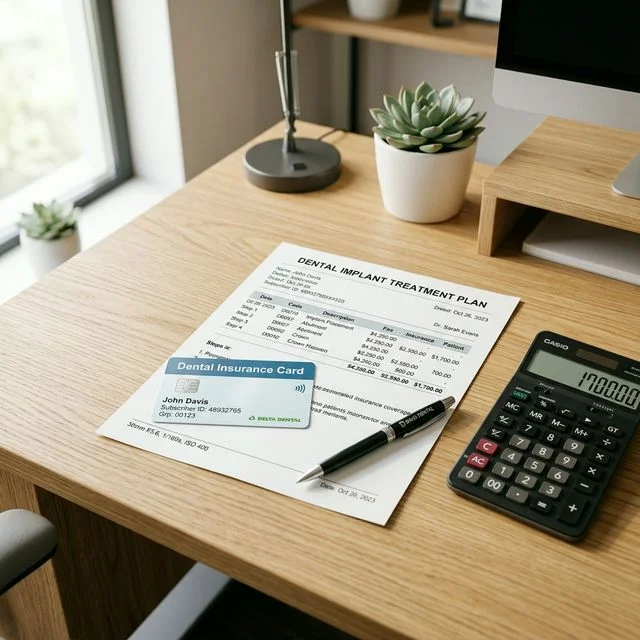
The True Cost of Dental Implants in 2026
A dental implant is a titanium or zirconia post surgically placed into the jawbone to replace a missing tooth root. In the United States, the total cost of a single dental implant — including the fixture, abutment, and crown — ranges from $3,000 to $7,000 as of 2026. The national average is approximately $4,500. Cost varies significantly based on implant brand, crown material, geographic location, surgeon experience, and whether additional procedures (bone grafting, sinus lift, extraction) are needed.
Dental implants represent the pinnacle of modern restorative dentistry — a permanent, biocompatible solution that mimics the structure and function of natural teeth. According to the American Academy of Implant Dentistry (AAID), over 3 million Americans currently have implants, with that number growing by approximately 500,000 per year. Despite their unmatched clinical outcomes and 95–98% long-term success rate, the cost of dental implants remains the single largest barrier to treatment acceptance.
This guide provides a transparent, data-driven breakdown of every dollar you can expect to spend — from the initial consultation to the final crown — along with actionable strategies to reduce your out-of-pocket expense without compromising clinical quality.
Average Dental Implant Cost in the US (2026 Data)
The national average for a single dental implant — including the fixture, abutment, and crown — ranges from $3,500 to $5,500. However, this figure varies dramatically based on geographic location, provider specialty, and the specific implant system used.
| Procedure | Low Estimate | Average | High Estimate |
|---|---|---|---|
| Single Tooth Implant | $3,000 | $4,500 | $6,500 |
| Implant-Supported Bridge (3–4 teeth) | $6,000 | $10,000 | $15,000 |
| All-on-4 Full Arch | $15,000 | $25,000 | $35,000 |
| Full Mouth (Both Arches) | $30,000 | $50,000 | $70,000+ |
Urban centers like New York City, Los Angeles, and San Francisco consistently rank at the high end, while mid-sized cities in the South and Midwest offer 20–30% lower pricing. Use our Cost Calculator to get a personalized estimate based on your city and insurance status, or explore detailed pricing in our New York City and Los Angeles cost guides.
ADA Billing Reference: The primary CDT codes for implant procedures are D6010 (surgical placement of implant body), D6057 (custom fabricated abutment), and D6058 (abutment-supported porcelain/ceramic crown). Ask your provider for a line-item treatment plan using these codes to compare quotes accurately.
Cost Breakdown: Implant vs Abutment vs Crown
The Three-Part System Explained
Advertising that quotes a "$999 implant" is almost always referring exclusively to the titanium fixture — a single component in a three-part prosthetic system. Understanding each component's role — and the corresponding ADA CDT billing codes — clarifies why the total cost is significantly higher:
- The Implant Fixture (The Root) — CDT D6010: A medical-grade titanium (ASTM F67 Grade 4) or zirconia (Y-TZP) screw, typically 3.5–5.0 mm in diameter and 8–13 mm in length, surgically placed into the alveolar bone. The fixture's surface undergoes micro-roughening treatments (such as SLActive® by Straumann or TiUnite® by Nobel Biocare) to accelerate osseointegration. The surface micro-topography (1–3 μm roughness) increases bone-to-implant contact (BIC) by 30–50% compared to machined surfaces. Average cost: $1,500–$2,500.
- The Abutment (The Connector) — CDT D6057: This precision-machined component connects the subgingival implant to the supragingival crown. Custom-milled abutments (CAD/CAM fabricated from titanium or zirconia) cost more than prefabricated stock abutments but provide superior soft-tissue adaptation, emergence profile, and peri-implant mucosal seal. Average cost: $400–$900.
- The Crown (The Visible Tooth) — CDT D6058–D6065: The final prosthetic restoration, fabricated from materials ranging from porcelain-fused-to-metal (PFM) to monolithic zirconia or lithium disilicate (e.max). Anterior crowns in the "smile zone" typically demand premium esthetics and layered ceramics. Posterior crowns can use more durable monolithic materials. Average cost: $1,000–$2,500.
Compare the specific implant systems available using our Brand Comparator Tool, or read our comprehensive brand guide for detailed analysis of each manufacturer. Understanding the full step-by-step procedure also helps clarify where each cost is incurred.
Hidden Fees Most Patients Don't Expect
The advertised implant price rarely includes the full scope of preparatory and ancillary procedures. The following "hidden" costs catch many patients off guard:
Diagnostic and Preparatory Costs
- Cone Beam CT Scan (CBCT): $250–$600. This three-dimensional radiograph is essential for presurgical planning — mapping the inferior alveolar nerve canal, maxillary sinus proximity, and available bone volume with sub-millimeter precision.
- Tooth Extraction: $150–$400 per tooth. Simple extractions are on the lower end; surgical extractions of impacted or fractured roots cost more.
- Bone Grafting: $400–$1,500 per site. Required in approximately 50% of cases where alveolar ridge resorption has reduced bone height or width below the minimum threshold (typically ≥ 6 mm height and ≥ 5 mm width). Options include autogenous grafts, allografts (freeze-dried bone allograft), xenografts (bovine-derived), or synthetic biomaterials.
- Sinus Lift (Sinus Floor Elevation): $1,500–$3,000. Necessary when the maxillary sinus has pneumatized into the posterior ridge, leaving inadequate bone for implant placement in the upper molar region.
- Temporary Restoration: $300–$800. A provisional crown or flipper worn during the 3–6 month osseointegration period.
Comfort and Recovery Add-Ons
- Sedation / IV Sedation: $250–$900. Many patients opt for conscious sedation beyond standard local anesthesia.
Learn what to expect at each stage in our step-by-step procedure guide.
Cost by Implant Type
Your total investment depends heavily on how many teeth you're replacing and the prosthetic design chosen:
- Single Tooth Implant: One fixture + one abutment + one crown. The most common scenario, averaging $4,500 nationwide.
- Implant-Supported Bridge: Two implants support a three- or four-unit bridge, replacing multiple adjacent teeth without one implant per tooth. This is more economical per tooth than individual implants, typically $6,000–$15,000.
- All-on-4® / All-on-6: A full-arch fixed prosthesis supported by 4–6 strategically placed implants. This protocol, pioneered by Nobel Biocare, enables immediate loading — patients receive a temporary prosthesis the same day as surgery. Cost: $15,000–$35,000 per arch. Estimate your expense with our Full Mouth Cost Calculator.
- Implant-Supported Overdenture: A removable denture that snaps onto 2–4 implants for improved retention. More affordable than fixed options at $8,000–$15,000 per arch. Compare this option against traditional dentures using our Implant vs Alternatives Calculator.
How Insurance Covers Dental Implants
Dental insurance coverage for implants has evolved significantly over the past decade. While many legacy plans still classify implants as "not medically necessary," an increasing number of PPO and employer-sponsored plans now offer partial coverage:
- Typical Coverage: Most plans cover 50% of the crown and abutment (classified as a "major restorative" procedure) up to the annual maximum, which ranges from $1,500 to $2,500.
- Surgical Component: Some plans cover the implant placement under the surgical benefit, though annual maximums still apply.
- Medical Insurance: In cases where tooth loss results from trauma, cancer treatment, or a congenital condition (such as ectodermal dysplasia), medical insurance — rather than dental insurance — may cover the surgical portion.
- Medicare: Original Medicare (Parts A & B) does not cover dental implants. However, some Medicare Advantage (Part C) plans include dental benefits with implant allowances.
Estimate your insurance savings and out-of-pocket costs with our Insurance Savings Calculator, and read our complete insurance coverage guide for a detailed breakdown of what PPO, HMO, and Medicare Advantage plans actually cover.
5 Evidence-Based Ways to Reduce Your Cost
Lower-Cost Provider Options
- University dental school clinics — Accredited programs supervised by board-certified faculty offer implant treatment at 30–50% below private practice rates. Read more in our affordable dental implants guide.
- Dental discount plans — Membership plans (e.g., Careington, Aetna Dental Access) negotiate 20–40% discounts with participating providers, with no annual maximums or waiting periods.
- Strategic financing — Third-party lenders like CareCredit and LendingClub offer 0% APR promotional periods of 12–24 months. Explore options with our Financing Calculator.
- Community Health Centers (FQHCs) — Federally Qualified Health Centers provide dental services on a sliding fee scale based on income.
- Consider mid-range implant systems — Implant brands like Osstem, Hiossen, and MIS Implants offer excellent clinical outcomes at 30–50% lower cost than premium European systems, without sacrificing FDA clearance or surface technology standards.
Additionally, dental implants may qualify as a tax-deductible medical expense if your total unreimbursed medical costs exceed 7.5% of your adjusted gross income. Learn the specifics — including HSA and FSA strategies — in our dental implant tax deduction guide.
Real-World Cost Scenario
Consider Maria, a 58-year-old patient in Dallas, Texas, who needs to replace a lower first molar (#19) lost to a periapical abscess:
| Item | Cost |
|---|---|
| CBCT Scan | $350 |
| Extraction of #19 | $275 |
| Socket preservation bone graft | $650 |
| Implant fixture (Straumann BLX) | $2,100 |
| Custom titanium abutment | $575 |
| Monolithic zirconia crown | $1,450 |
| Total Before Insurance | $5,400 |
| Insurance coverage (50% on crown + abutment) | −$1,012 |
| Patient Out-of-Pocket | $4,388 |
Maria financed the remaining balance through a 12-month 0% APR CareCredit plan, bringing her monthly payment to approximately $366. She chose a Straumann BLX implant for its clinically-proven SLActive® surface, which shortened her osseointegration period from 12 weeks to 6 weeks. Model your own monthly payments with our Financing Calculator.
Cost by Geographic Region (State-Level Data)
Regional Price Comparison
Dental implant pricing varies by as much as 40% across US states, driven by differences in local overhead costs, provider density, and cost of living. According to data aggregated from the American Dental Association's Health Policy Institute Survey of Dental Fees and verified implant practice fee schedules, here are representative single-implant costs (fixture + abutment + crown) across major regions:
| Region | Representative States | Single Implant Range |
|---|---|---|
| Northeast | New York, Massachusetts, Connecticut | $4,500–$6,500 |
| West Coast | California, Washington, Oregon | $4,200–$6,000 |
| South / Southeast | Texas, Florida, Georgia | $3,200–$5,000 |
| Midwest | Ohio, Michigan, Illinois | $3,000–$4,800 |
| Mountain West | Colorado, Arizona, Utah | $3,300–$5,200 |
These ranges reflect private-practice pricing; university dental school clinics in each region typically offer 30–50% lower fees. Use our Cost Calculator for a personalized estimate based on your exact city, or explore our state-by-state guides for detailed local data including dental school options and affordable providers.
How Implant Brand Choice Affects Your Total Cost
Pricing Tiers and Trade-Offs
The implant system your surgeon selects directly affects your total bill — and your long-term outcomes. Manufacturers are grouped into three pricing tiers, each with distinct trade-offs between cost, clinical evidence depth, and prosthetic versatility:
| Tier | Brands | Fixture Cost | Best For |
|---|---|---|---|
| Premium | Straumann, Nobel Biocare, Dentsply Sirona | $1,800–$2,800 | Complex cases, immediate loading, aesthetic zone |
| Mid-Range | Zimmer Biomet, BioHorizons, Osstem | $800–$2,100 | Standard cases, excellent value-to-quality ratio |
| Value | Hiossen, MIS Implants, Dentium | $600–$1,400 | Budget-focused patients, routine single-tooth cases |
All brands listed above are FDA-cleared (510(k)) and have published peer-reviewed clinical data with success rates exceeding 95%. The primary advantages of premium systems are in specialized situations: same-day teeth protocols (immediate loading), severely compromised bone, and anterior aesthetic cases where custom prosthetic options are critical. For standard posterior single-tooth replacement in healthy bone, mid-range and value-tier systems deliver comparable 10-year outcomes at significantly lower cost. Explore every brand in detail with our Brand Comparison Guide or compare two systems side-by-side with our Brand Comparator Tool.
What to Ask Your Dentist Before Committing
Essential Pre-Treatment Questions
Before signing a treatment plan, a well-informed patient should ask these critical questions. This checklist — recommended by the American Academy of Implant Dentistry (AAID) — helps you evaluate proposals from different providers on an apples-to-apples basis:
- "What implant system/brand will you use, and why?" — Ensures you know exactly which manufacturer's product is being placed. Verify it is FDA-cleared and internationally available. See our brand guide for context.
- "Is bone grafting or sinus lift included in this estimate?" — Many quotes exclude preparatory procedures that add $400–$3,000 to the total.
- "What is the total cost from consultation through final crown?" — Request a line-item quote using CDT codes (D6010, D6057, D6058) so you can compare across providers.
- "What type of crown material will be used?" — Monolithic zirconia and lithium disilicate (e.max) cost more but offer superior durability. PFM crowns are more affordable but may show a grey line at the gum margin over time.
- "What is your implant success rate, and how many have you placed?" — Board-certified specialists typically report 95–98% success. Ask for specifics — not just general claims.
- "What happens if the implant fails?" — Understand the re-treatment policy and whether the implant manufacturer's warranty covers replacement. See our warranty comparison.
- "Do you offer financing or payment plans?" — Many offices partner with CareCredit or LendingClub. Model your monthly payments with our Financing Calculator.
Taking these questions to your consultation empowers you to make a confident, data-driven decision. For more context, read about the complete step-by-step procedure, explore how implants compare to dentures, or discover strategies to reduce your total cost. When you're ready, use our interactive Cost Calculator to estimate your total investment, and track your post-surgery recovery day by day.
2026 Dental Implant Cost Breakdown: Component by Component
A dental implant is not a single purchase — it is a system of components, each with its own cost. Understanding this breakdown helps you compare quotes accurately:
| Component | What It Is | Cost Range (2026) | Cost Drivers |
|---|---|---|---|
| Implant fixture (post) | Titanium or zirconia screw placed in jawbone | $1,500–$2,000 | Brand (Straumann $400+ vs Osstem $80+), material (titanium vs zirconia) |
| Abutment | Connector between post and crown | $300–$500 | Stock vs custom-milled; material (titanium, zirconia) |
| Crown | Visible tooth (porcelain, zirconia, or PFM) | $1,000–$2,000 | Full zirconia ($1,500+) vs porcelain-fused-to-metal ($1,000+) |
| Surgery fee | Surgeon's professional fee | Included in fixture cost or $500–$1,000 separately | Surgeon's experience, geographic location |
| CBCT scan | 3D diagnostic imaging | $150–$500 | Often included in consultation fee |
| Surgical guide | 3D-printed placement template (for guided surgery) | $200–$500 | Optional but increasingly standard |
Total single implant: $3,000–$7,000 (sum of above components). When comparing quotes, always ask for an itemized breakdown to ensure you are comparing equivalent treatments.
Cost by Procedure Type: Single, Multiple, and Full-Arch
| Procedure Type | 2026 Cost Range | What's Included | When Recommended |
|---|---|---|---|
| Single implant | $3,000–$7,000 | 1 fixture + 1 abutment + 1 crown | Replacing one missing tooth |
| Implant bridge (2–3 teeth) | $6,000–$12,000 | 2 implants + bridge spanning 3–4 teeth | Replacing 2–4 adjacent missing teeth |
| All-on-4 (per arch) | $18,000–$35,000 | 4 implants + full-arch prosthesis (acrylic or zirconia) | Replacing all teeth in one jaw |
| All-on-6 (per arch) | $24,000–$40,000 | 6 implants + full-arch prosthesis | More support needed (larger jaw, heavy bite force) |
| Full mouth (both arches) | $40,000–$60,000+ | All-on-4 or All-on-6 for upper and lower jaws | Complete mouth reconstruction |
| Mini dental implants | $500–$1,500 per mini implant | Smaller diameter implant (less bone needed) | Denture stabilization, narrow bone ridge |
For specific procedure guides: All-on-4 guide | Mini implants guide | Full procedure walkthrough
Additional Procedures That Affect Total Cost
The "sticker shock" of dental implants often comes from additional procedures that are not included in the base implant quote. These preparatory treatments can add $200 to $5,000+ to your total cost:
| Additional Procedure | Cost Range | When Needed | % of Patients Who Need It |
|---|---|---|---|
| Simple tooth extraction | $75–$300 | Damaged tooth must be removed first | ~40% |
| Surgical extraction | $200–$650 | Impacted, broken, or multi-rooted teeth | ~15% |
| Minor bone graft | $200–$1,200 | Localized bone deficiency at implant site | ~30% |
| Major bone graft | $1,500–$3,000 | Significant bone loss from long-term tooth absence | ~10% |
| Sinus lift | $1,500–$3,000 | Upper back teeth (molars) with low sinus floor | ~15% (upper jaw only) |
| Periodontal treatment | $500–$2,000 | Active gum disease must be treated first | ~20% |
| Temporary crown/prosthesis | $300–$1,500 | Aesthetic zone or while waiting for osseointegration | ~50% |
Pro tip: Ask for a "worst-case" estimate that includes likely additional procedures. This prevents surprises after your CBCT scan reveals bone or gum issues that weren't visible during the initial exam.
Dental Insurance Coverage for Implants in 2026
Dental insurance coverage for implants has improved in recent years, but significant limitations remain:
What Most Plans Cover
- Coverage rate: Most plans classify implants as "major services" and cover approximately 50% after deductibles
- Annual maximum: The biggest limitation — most plans cap annual benefits at $1,000 to $2,500. Since a single implant costs $3,000–$7,000, insurance may only cover $500–$1,250 of the total cost.
- Waiting period: 6–12 months for major services on new plans
- Missing tooth clause: Some plans won't cover implants for teeth lost before the policy began
Maximizing Your Insurance Benefits
- Stack annual benefits: If treatment spans two calendar years (e.g., extraction in December, implant in January), you can use two years of annual maximums.
- Separate medical + dental: If implants are medically necessary (e.g., related to trauma, cancer treatment, sleep apnea), some costs may qualify under medical insurance.
- Pre-authorization: Always submit a pre-treatment estimate to your insurer before starting. This clarifies your exact coverage and prevents denials.
- Supplemental plans: Adding a supplemental dental plan before implant treatment can increase your annual maximum to $3,000–$5,000.
For a detailed insurance comparison: Best dental insurance for implants →
7 Proven Strategies to Reduce Implant Costs
- Dental school clinics: 40–60% below private practice rates. See our directory of dental school programs →
- Get 3+ quotes: Prices vary significantly between practices, even in the same city. Always compare itemized quotes from at least 3 providers.
- Use an FSA/HSA: Pay with pre-tax dollars, saving 20–30% on your marginal tax rate.
- 0% APR financing: CareCredit and LendingClub offer 0% interest for 12–24 months. Model your monthly payment →
- Budget implant brands: FDA-cleared Korean brands (Osstem, Dentium) cost 30–50% less than premium European brands with comparable short-term data. Compare brands →
- Ask about bundled pricing: Many practices offer package deals for multiple implants or full-arch treatments, reducing per-implant cost by 15–25%.
- Clinical trials: Receive free or discounted treatment as a study participant. Search ClinicalTrials.gov for "dental implant" studies recruiting near you.
Why Dental Implant Prices Vary So Much
You may see implant quotes ranging from $1,500 to $10,000 for seemingly the same procedure. Here are the factors driving this variation:
- Geographic location: Major metro areas (NYC, LA, SF) cost 30–50% more than rural or suburban areas due to higher overhead costs.
- Surgeon credentials: Oral surgeons and periodontists (specialists) typically charge more than general dentists, but may achieve higher success rates in complex cases.
- Implant brand: Premium systems (Straumann, Nobel Biocare) cost the practice 3–5× more than budget brands (Osstem, Hiossen), and this cost is passed to patients.
- Crown material: Full zirconia crowns are the most expensive ($1,500+) but also the most durable. Porcelain-fused-to-metal (PFM) crowns are less expensive but may show a dark line at the gum margin over time.
- Technology: Practices using guided surgery, digital impressions, and in-house milling labs may charge more upfront but deliver more precise results with fewer complications.
- Inclusions: Some "low-cost" quotes exclude the crown, abutment, or follow-up visits. Always confirm what is included in the quoted price.