Mini Dental Implants: Are They Right for You?
Mini dental implants (MDIs) are narrow-diameter implants (1.8–3.0mm vs 3.5–6.0mm for standard implants) that require less bone volume and a less invasive procedure. They cost $500–$1,500 per implant in 2026 (vs $3,000–$6,000 for standard) and are primarily used to stabilize loose dentures or replace small teeth in narrow spaces. MDIs are a single-piece design (no separate abutment) and can often be placed and loaded in a single visit with minimal recovery.
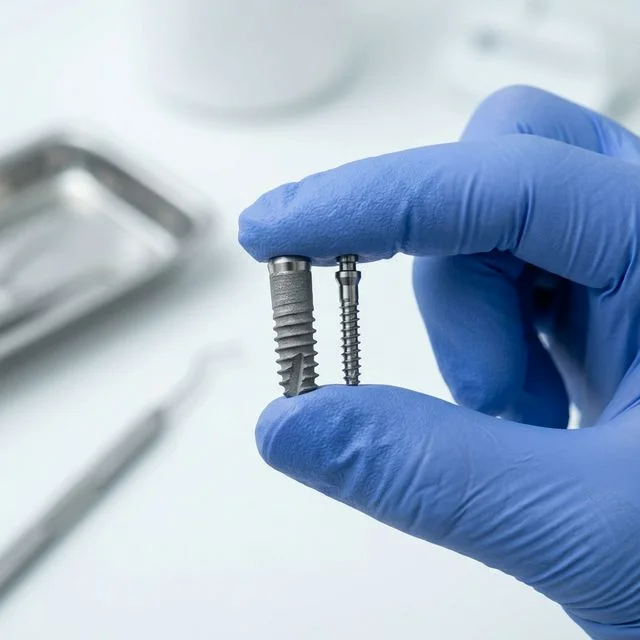
What Are Mini Dental Implants?
If you've been told you lack the bone density for traditional implants, or if the idea of extensive dental surgery feels overwhelming, mini dental implants (MDIs) might offer a gentle, life-changing alternative.
Mini implants are essentially smaller versions of standard implants—measuring just 1.8 to 3.0mm in width (about the thickness of a toothpick). Initially used as temporary anchors in orthodontics, they have proven so stable that they are now widely used as a permanent solution to secure loose dentures or replace small missing teeth.

Mini implants are most commonly used to securely anchor lower dentures, giving patients the confidence to eat normally again.
Why choose mini implants? Here is what makes them different:
- Less Invasive: They are placed directly through the gum, often without needing an incision or stitches.
- No Bone Grafts: Because they are so slender, they rarely require painful and expensive bone grafting.
- Rapid Recovery: Many patients walk out of the clinic and enjoy a meal the very same day.
- Cost-Effective: Because the procedure is faster and uses fewer materials, they are typically half the cost of standard implants.
Mini vs. Standard Implants: Finding the Right Fit
It's important to understand that mini implants don't replace standard implants in every scenario. They are a specialized tool for specific needs. Here is how they compare:
| Feature | Mini Dental Implant (MDI) | Standard Implant |
|---|---|---|
| Typical Cost | $500 – $1,500 per implant | $3,000 – $5,500 per implant |
| Surgery Type | Minimally invasive (flapless) | Traditional surgical flap |
| Healing Time | Often same-day use | 3 to 6 months |
| Bone Required | Minimal | Significant (grafting often needed) |
| Best Used For | Securing dentures, replacing small front teeth | Replacing any tooth, supporting bridges |
| Expected Lifespan | 10 to 15 years | 25+ years (often lifelong) |
When Mini Implants Make Sense (and When They Don't)
Who Benefits Most?
Mini implants are truly transformative in the right circumstances. They are an excellent option if you are facing:
- Loose Lower Dentures: This is the absolute best use case. Just four mini implants can lock a "floating" lower denture firmly in place.
- Thin Jawbone: If you've suffered bone loss over the years and cannot undergo grafting surgeries.
- Health Concerns: Older adults or those with medical conditions who need a procedure with lower physical stress and faster healing.
When Should You Avoid Them?
While wonderful for anchoring dentures, MDIs lack the surface area to handle intense chewing pressure over decades. They are usually not recommended for:
- Replacing Back Molars: The bite forces here are too heavy for a narrow implant.
- Heavy Teeth Grinders: Patients with severe bruxism may fracture mini implants.
- Supporting Fixed Bridges: Multiple teeth require the sturdy foundation of standard implants.
A Realistic Look at Costs Over Time
While the upfront cost of mini implants is highly appealing, it is important to factor in their lifespan. A set of 4 mini implants to secure a denture might cost $2,000 to $6,000—a fraction of the $10,000+ needed for a standard implant-retained denture. However, because their average lifespan is 10 to 15 years, you may need to replace them eventually.
For many patients, especially those on a fixed budget or for whom standard surgery isn't physically possible, this trade-off is completely worth it for the immediate return of their quality of life.
Want a precise breakdown for your specific situation? Try our Implant vs Alternatives Calculator.
The Procedure: Gentle, Fast, and Effective
If you are anxious about dental work, the mini implant procedure is designed to be as stress-free as possible:
- Local Numbing: You will receive a simple local anesthetic—no general anesthesia or IV sedation is normally required.
- Placement: Using precise guides, the dentist creates a tiny pinhole in the gum and gently threads the implant into the bone.
- Immediate Attachment: Often, your existing denture can be adjusted during the same visit to snap right onto the new implants.
- Go Home Smiling: The entire process usually takes under an hour. Post-op discomfort is minimal (usually a 2 or 3 out of 10), and most patients handle it easily with over-the-counter ibuprofen.
What About Longevity and Risk?
We believe in full transparency: because they are narrower, mini implants do have a slightly higher failure rate (about 5-10% over 5 years compared to 2-4% for standard implants). They are essentially a compromise—trading some long-term durability for surgical ease and affordability.
To maximize their lifespan, it's crucial to maintain excellent oral hygiene, attend regular professional cleanings, and wear a night guard if you are prone to clenching your jaw.
For a detailed breakdown of failure risks, please read our guide on Dental Implant Failure Rates.
Mini vs Standard Dental Implants: Complete Comparison
| Factor | Mini Dental Implant (MDI) | Standard Dental Implant |
|---|---|---|
| Diameter | 1.8–3.0mm | 3.5–6.0mm |
| Design | One-piece (post + ball head) | Two-piece (post + separate abutment) |
| 2026 Cost | $500–$1,500 per implant | $2,500–$6,000 per implant (total with crown) |
| Bone requirement | Minimal — works with narrow ridges | Requires adequate bone width and density |
| Bone grafting | Rarely needed | ~30% of patients need grafting |
| Surgery | Minimally invasive — no incision, no sutures | Surgical incision, drilling, sutures required |
| Procedure time | 30–60 minutes (including loading) | 30–60 minutes (surgery only), 3–6 months healing |
| Immediate loading | Yes — dentures can be retrofitted same day | Selective — only with high primary stability |
| Load-bearing capacity | Lower — suitable for denture support and small teeth | Higher — supports molars and bridges |
| Expected lifespan | 5–15 years (with proper care) | 25+ years (implant post); 15–20 years (crown) |
| Success rate | 85–95% (varies by application) | 95–98% (10-year data) |
| Best for | Denture stabilization, narrow ridges, elderly, budget | Permanent single/multiple tooth replacement |
Key insight: MDIs are not a "lesser version" of standard implants — they are a different tool for different situations. The comparison is like a sedan vs an SUV: each is ideal for its intended purpose.
Denture Stabilization: The #1 Use for Mini Implants
The most common and clinically proven application for MDIs is stabilizing loose dentures, particularly lower dentures which are notoriously difficult to keep in place.
How It Works
- Step 1: 2–4 mini implants are placed along the lower jaw ridge in a single visit (30–60 minutes under local anesthesia).
- Step 2: Your existing denture is retrofitted with metal housings that snap onto the ball-shaped heads of the mini implants.
- Step 3: Same day, you walk out with a stable, snap-on denture — no waiting for healing.
Cost for Denture Stabilization (2026)
| Protocol | Cost Range | What's Included |
|---|---|---|
| 2 MDIs (lower jaw, minimal) | $1,000–$3,000 | 2 mini implants + denture retrofit |
| 4 MDIs (lower jaw, standard) | $2,000–$6,000 | 4 mini implants + denture retrofit |
| 4 MDIs + new denture | $3,500–$8,000 | 4 mini implants + new overdenture |
| vs All-on-4 (for comparison) | $20,000–$35,000 | 4 standard implants + fixed bridge |
The tradeoff: MDI-stabilized dentures are removable (you take them out at night for cleaning), while All-on-4 provides a permanent, fixed solution. MDIs are ideal for patients who want improved stability at a fraction of the All-on-4 cost.
Who Is a Good Candidate for Mini Implants?
Ideal Candidates
- Denture wearers with loose or uncomfortable dentures seeking better stability
- Patients with bone loss who lack sufficient bone for standard implants and want to avoid bone grafting
- Elderly patients who may not tolerate more invasive surgery well
- Budget-conscious patients who want an implant solution at lower cost
- Patients with medical conditions (controlled diabetes, blood thinners) that make longer surgeries risky
- Narrow bone ridges where standard implant diameter won't fit
Not Recommended If
- You need to replace load-bearing molars (standard implants are better for heavy chewing forces)
- You want a fixed, permanent restoration (consider All-on-4 or standard implants)
- You want maximum longevity (25+ years) — standard implants have better long-term data
- You have adequate bone for standard implants — the standard option will provide superior outcomes
Pros and Cons: An Honest Assessment
Advantages of Mini Implants
- 50–70% lower cost than standard implants
- No bone grafting needed — suitable for patients with significant bone loss
- Minimally invasive — small pilot hole, no incision, no sutures
- Single-visit placement — done in under an hour
- Immediate loading — dentures stabilized the same day
- Shorter recovery — most patients experience minimal discomfort
- Local anesthesia only — no sedation typically required
Limitations of Mini Implants
- Lower load-bearing capacity — not suitable for replacing molars or supporting fixed bridges
- Shorter lifespan — documented at 5–15 years vs 25+ years for standard implants
- Higher long-term failure rate — 85–95% vs 95–98% for standard implants (varies by study)
- More prone to fracture — the smaller diameter means less structural strength
- Limited prosthetic options — primarily used for overdentures, not individual crown restorations
- May need replacement — if MDIs fail, standard implants may still be needed later
Realistic Longevity: How Long Do Mini Implants Last?
One of the most important questions about MDIs — and one where honest information is critical:
- Short-term (1–5 years): MDIs perform very well, with success rates comparable to standard implants. Patients experience immediate stability improvements.
- Medium-term (5–10 years): Some studies show increased failure rates compared to standard implants, particularly in areas of high mechanical stress. Maintenance visits every 6 months help identify loosening early.
- Long-term (10+ years): Limited data available. Fewer studies have tracked MDIs beyond 10 years compared to the 20–30 year data available for standard implants.
Are mini implants a stepping stone? Many clinicians view MDIs as an excellent intermediate solution — providing years of improved quality of life at lower cost, with the option to transition to standard implants or All-on-4 later when budget and health allow.
Compare all your options: Complete alternatives guide | Full cost comparison