Dental Implants After Bone Loss: Can You Still Get Them?
Dental implants after bone loss require specialized approaches when the jawbone has resorbed due to missing teeth, periodontal disease, or prolonged denture use. Approximately 50% of implant patients require some form of bone augmentation. Options include bone grafting ($300–$3,000, 90–98% success rate), sinus lifts ($1,500–$3,000), zygomatic implants ($12,000–$25,000 per arch), and short implants (6–8mm) that work with minimal bone height. With modern techniques, severe bone loss is no longer a dealbreaker for implants.
The Bad News: Why Your Jawbone is "Melting Away"
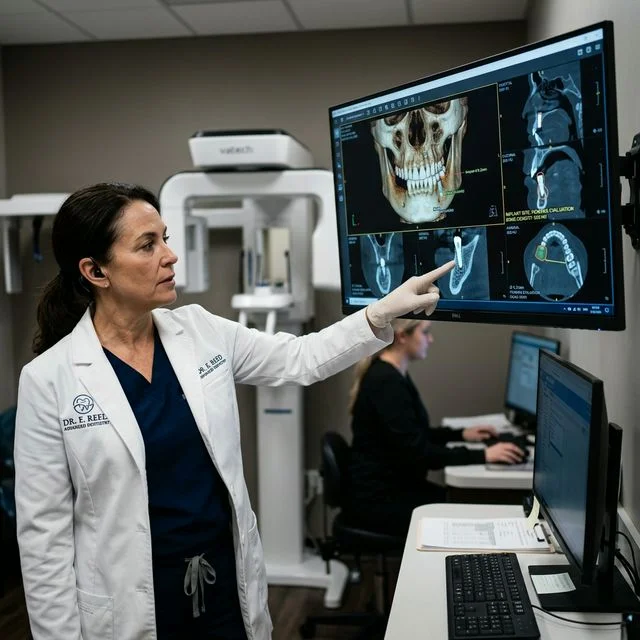
If a dentist recently looked at your X-rays, sighed, and said you have "severe bone loss," your stomach probably dropped. You might be wondering if you missed your window to ever get permanent teeth again.
First, take a deep breath. Yes, you can almost certainly still get dental implants.
But to understand your options, you need to know what happened: When you lose a tooth (or wear dentures for years), your jawbone doesn't just sit there waiting. Without the chewing pressure of an active tooth root, your body assumes that part of the bone isn't needed anymore, and the bone slowly begins to resorb, or melt away. In fact, you can lose 25% of your bone width in the very first year after an extraction.
To hold a titanium implant securely, you need a strong foundation. Trying to put an implant into a thin, shallow jawbone is like trying to hammer a thick nail into a piece of drywall—it simply won't hold.
Option 1: Rebuilding the Foundation (Bone Grafting)
If you choose to rebuild the bone you've lost, you will need a bone graft. This sounds medieval and terrifying to many patients, but in modern dentistry, it is an extremely common, routine procedure.
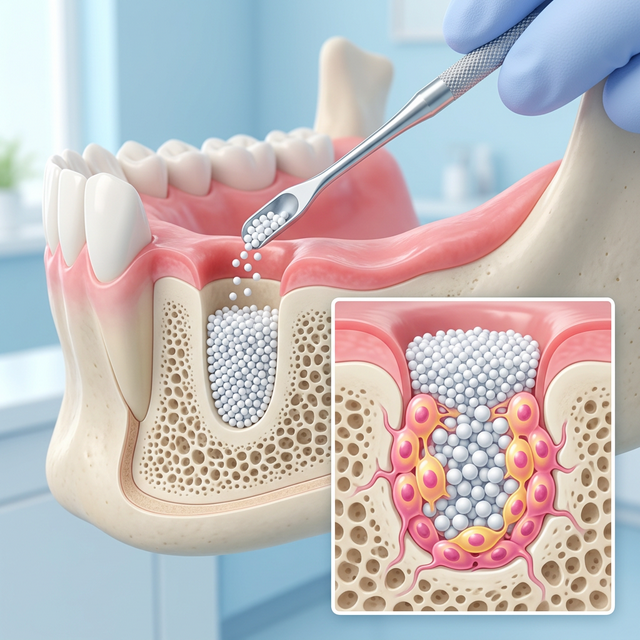
During a bone graft, the doctor places bone-like material into the empty space. Your body then uses this material as a scaffold to grow its own new, solid bone over the next 4 to 6 months.
Types of Bone Grafts & What They Actually Cost (2026)
Insurance almost never pays for this, so here is what you will likely pay out-of-pocket:
| Type of Graft | What It Actually Is | Estimated Cost |
|---|---|---|
| Allograft (Most Common) | Sterilized, processed donor bone (very safe, high success rate) | $800–$2,000 |
| Xenograft | Sterilized animal bone (usually bovine/cow) | $500–$1,500 |
| Synthetic | Artificial calcium-based material | $300–$800 |
| Autograft (Rare) | A tiny block of your own bone (usually from your chin) | $2,000–$3,000 |
What is a "Sinus Lift"?
If you are missing your upper back teeth (molars), the bone loss often causes your sinus cavity to drop down. A sinus lift is simply a specialized bone graft where the doctor gently nudges the sinus membrane up and packs bone material underneath it, creating enough vertical depth for the implant. Expect to add $1,500 to $3,000 per side for this specific procedure.
Does Bone Grafting Hurt? (The Honest Truth)
Many patients are more afraid of the bone graft than the actual implant surgery. The truth? The graft itself usually isn't very painful during recovery.
You will experience swelling and a dull, throbbing ache for about 3 to 5 days, which is almost always manageable with over-the-counter Ibuprofen and ice packs. The most frustrating part isn't the pain; it's the waiting period. You cannot rush biology. You must wait 4 to 6 months for the new bone to turn to concrete before the doctor can safely place the implants.
Option 2: "Graft-Free" Alternatives (Bypassing the Problem)
What if you don't want to wait 6 months, or you don't want to spend $3,000 on a sinus lift? Modern dentistry has engineered ways to bypass the missing bone entirely.
1. The All-on-4 Technique
If you need a full set of teeth replaced, All-on-4 is brilliant. Instead of planting screws straight down into the missing bone, the doctor tilts the back two implants at a 45-degree angle. This allows the implant to reach deeper, denser bone further forward in your jaw, completely bypassing the eroded areas. Result: Usually no bone grafting required, and you get temporary teeth the same day.
2. Zygomatic Implants (For Severe Upper Jaw Bone Loss)
If your upper jawbone is completely gone, there is still hope. Zygomatic implants are extra-long titanium posts that anchor into your cheekbones (the zygoma), which are incredibly dense, rather than your jaw. It sounds intense, but it eliminates the need for massive, year-long bone grafting procedures. This is highly specialized surgery performed only by top Oral Surgeons.
3. Short Implants
Standard implants are 10–13mm long. If you only have 7mm of bone height left, some doctors will use an ultra-short (6–8mm) but slightly wider implant. A 2022 meta-analysis in Clinical Oral Implants Research showed that in the right candidate, these short implants have survival rates virtually identical to standard implants, saving you money and surgery time.
How to Avoid Being "Up-Sold" on a Bone Graft
Because bone grafts add thousands of dollars to the bill, some chain clinics over-prescribe them. If a dentist tells you that you need extensive grafting, always get a second opinion from a Board-Certified Periodontist or Oral Surgeon.
- Ask: "Am I a candidate for short implants?"
- Ask: "If I do a bridge instead of a single implant, can we avoid the graft?"
Get clarity on your numbers. Use our Implant Cost Calculator to see how an $800 graft changes your total bottom line.
Treatment Options by Bone Loss Severity
| Bone Loss Level | What It Means | Available Solutions | Added Cost | Added Time |
|---|---|---|---|---|
| Mild | Slight ridge narrowing, adequate height | Narrow implants (e.g., Straumann Roxolid 3.3mm), minor guided bone regeneration | $0–$500 | None — simultaneous with implant |
| Moderate | Reduced width or height, needs augmentation | Particulate bone graft + membrane, socket preservation, short implants (6–8mm) | $300–$2,000 | 4–6 months healing before implant |
| Severe (upper jaw) | Significant maxillary resorption, sinus proximity | Sinus lift + bone graft, zygomatic implants, tilted implants (All-on-4) | $1,500–$25,000 | 4–9 months (graft) or immediate (zygomatic) |
| Severe (lower jaw) | Significant mandibular resorption, nerve proximity | Block bone graft, nerve lateralization, short implants, subperiosteal implants | $2,000–$5,000 | 4–9 months healing |
Key message: There is almost always a solution, regardless of your bone loss level. The question is which approach offers the best balance of cost, time, and long-term success for your specific situation.
Bone Grafting: Types, Costs, and Success Rates
| Graft Type | Source | Cost | Success Rate | Best For |
|---|---|---|---|---|
| Autograft | Your own bone (chin, jaw, hip) | $1,000–$3,000 | Highest (~98%) | Large defects; considered the "gold standard" for integration |
| Allograft | Donor human bone (tissue bank) | $500–$2,000 | High (~95%) | Most common; avoids second surgical site |
| Xenograft | Bovine (cow) bone (e.g., Bio-Oss) | $300–$1,500 | High (~94%) | Socket preservation, sinus lifts; excellent scaffold |
| Synthetic (alloplast) | Lab-made ceramic or polymer | $300–$1,000 | Good (~90%) | Patients who prefer no human/animal tissue; small defects |
Important: Implant success rates in grafted bone are 94–97% at 5 years — nearly comparable to implants placed in native bone. Modern grafting techniques have made this a highly predictable procedure.
Sinus Lifts: When Your Upper Jaw Needs More Bone
A sinus lift (sinus augmentation) adds bone between the jaw and the maxillary sinuses, creating space for upper jaw implants when the sinus has enlarged or bone has resorbed.
| Sinus Lift Type | Approach | Cost | Healing Time | When Used |
|---|---|---|---|---|
| Lateral window (open) | Small window cut in lateral sinus wall; bone graft packed under sinus membrane | $1,500–$3,000 | 6–9 months before implant | Significant bone height deficiency (<5mm remaining) |
| Crestal (closed/internal) | Graft material pushed up through the implant osteotomy site | $800–$1,500 | Simultaneous with implant | Moderate deficiency (5–8mm remaining); less invasive |
Zygomatic Implants: The Graft-Free Alternative for Severe Bone Loss
For patients with severe upper jaw bone loss who want to avoid bone grafting entirely, zygomatic implants offer a revolutionary solution:
- What they are: Extra-long implants (30–52mm) that anchor into the dense zygomatic (cheek) bone rather than the maxillary jawbone.
- Key advantage: The zygoma retains its density even when the jaw has severely resorbed, providing excellent stability without grafting.
- Immediate function: A full arch of teeth can be attached the same day as surgery.
- Cost: $12,000–$25,000 per arch (comparable to All-on-4 with grafting when you factor in the eliminated graft cost and extra healing time).
- Candidacy: Specifically designed for patients who have been told they have "too little bone" for conventional implants and want to avoid 6–12 months of bone grafting.
- Specialist requirement: Must be performed by an oral/maxillofacial surgeon with specific zygomatic implant training — this is an advanced procedure.
Compare full-arch options: All-on-4 guide | Nobel Biocare zygomatic systems
Short Implants: Working With What You Have
Short implants (typically 6–8mm, vs standard 10–13mm) are increasingly seen as a viable alternative to bone grafting for patients with limited bone height:
- Survival rates: Research shows ~88% survival at 14 years and ~94% at 5 years — competitive with standard-length implants in grafted bone.
- Advantage: Avoid bone grafting surgery, reduce treatment time by 4–9 months, lower total cost.
- Design innovations: Modern short implants use wider diameters, aggressive thread designs, and enhanced surfaces to compensate for reduced length.
- Limitation: Not suitable for all locations. Best for posterior mandible (back lower jaw) where bone height is limited by the nerve canal.
- Brands: Straumann and Zimmer Biomet offer well-documented short implant systems.
Why Does Bone Loss Happen?
Understanding the cause helps you choose the right solution and prevent further loss:
- Tooth loss without replacement: The jawbone needs stimulation from tooth roots. Within the first year of tooth loss, the extraction site loses 25% of its bone width. After 3+ years, significant vertical loss occurs.
- Prolonged denture use: Removable dentures rest on the gum ridge, not in the bone. The constant pressure accelerates bone resorption — a key reason dentures become looser over time.
- Periodontal disease: Advanced gum disease destroys the bone that supports teeth. Even after teeth are removed, the bone defect remains.
- Traumatic injury: Facial trauma can cause bone fractures and defects.
- Medical conditions: Osteoporosis, diabetes, and long-term steroid use can reduce bone density systemically.
Prevention tip: If you lose a tooth, consider placing an implant as soon as possible (or at minimum, getting a socket preservation graft) to prevent bone loss before it starts.
Related guides: Procedure step-by-step | Full cost breakdown | Implants for seniors